

Foot position on the Leg Press

This article is going to address one Fitness Myth that is always being regurgitated by Social Media Fitness Influencers and Online Coaches with no experience.
Contrary to popular Online belief, foot positioning on the Leg Press WILL NOT target ONE SPECIFIC MUSCLE over another!
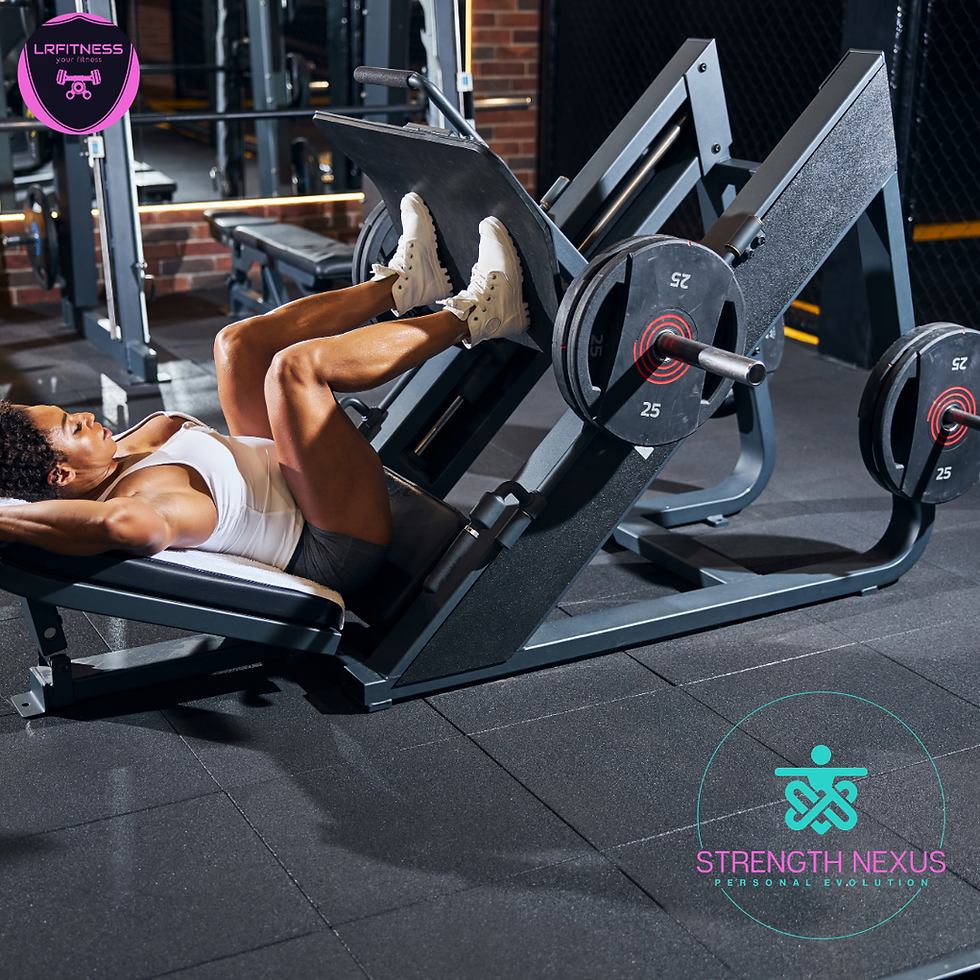
The leg press is one of the most widely used lower-body exercises, valued for its stability, scalability, and ability to load the lower limbs heavily without requiring advanced balance or coordination.
It primarily targets the quadriceps, with assistance from the glutes, the hamstrings (as the main Antagonists), the Tenscia Fasciae Latae and calves.
A persistent gym belief is that changing foot position—higher vs lower, wide vs narrow, toes in or out—can meaningfully “target” different muscles. However, modern research increasingly shows that this belief is overstated or simply incorrect.
IF YOU VALUE YOUR LEGS AND SHINS THEN READ ON!
What Muscles the Leg Press Actually Uses
Electromyography (EMG) and hypertrophy studies consistently show that the leg press is dominated by the quadriceps:
The vastus medialis and vastus lateralis show the highest activation
Followed by the rectus femoris, with smaller contributions from glutes and hamstrings
In simple terms: The leg press is fundamentally a knee extension exercise, so the quads will always be the primary drivers.
What the Latest Research Says About Foot Position
1. No meaningful differences in muscle activation
A key study on the inclined leg press found:
No significant differences in muscle activation across foot stances (wide, narrow, rotated, etc.)
The vastus medialis remained the most active muscle regardless of foot placement
The authors concluded that foot stance does not meaningfully alter which muscles are used, and individuals should simply use a comfortable position.
This aligns with the study’s explicit takeaway
“There are no differences in muscle activation regarding the feet stance”
2. Systematic reviews: evidence is inconsistent or weak
A broader review of leg press variations reported:
Evidence for changing muscle activation via technique tweaks (including stance) is “not compelling”
Most studies fail to show consistent or meaningful differences
3. Even other variables often don’t matter much
More recent work reinforces the same idea:
A 2025 study found no difference in quadriceps hypertrophy despite large changes in range of motion during leg press training
This strengthens the broader point: Within normal technique variations, the body tends to recruit the same primary muscles.
4. Exceptions are small and often misinterpreted
Some newer research suggests:
Slight shifts in emphasis can occur (e.g., higher foot placement may increase glute contribution)
However, these effects are:
Modest, not transformative
Often overshadowed by load, effort, and range of motion
Crucially, they do not change the primary muscles being used—the quadriceps still dominate.
Why Foot Position Feels Different (But Isn’t)
Lifters often report feeling different muscles with different foot placements. This is real—but misleading.
Here’s why:
1. Joint angles change sensation, not recruitment
Changing foot height or width alters:
Hip angle
Knee angle
Ankle mechanics
2. “Mind-muscle connection” is unreliable
Perceived activation ≠ actual activation.
EMG data repeatedly shows that what you feel doesn’t always match what’s working most.
3. The exercise constraint limits variability
Unlike free-weight squats, the leg press:
Locks you into a fixed movement path
Constrains coordination
This reduces the ability to meaningfully shift muscular emphasis.
Practical Takeaways
✔ What actually matters
Effort (training close to failure)
Load and progressive overload
Consistency and volume
❌ What doesn’t matter much
Foot width
Toe angle
Minor changes in foot height
Bottom Line
Despite widespread gym lore, foot position on the leg press does not meaningfully change which muscles are used. The exercise is—and remains—a quadriceps-dominant movement, regardless of stance.
Maintaining a shoulder-width stance with your toes pointed outward and knees aligned will engage the entire quadriceps while preventing unnecessary strain on your knees and shins.
The latest scientific evidence consistently shows:
Muscle activation patterns are largely unchanged across foot positions
Any differences are minor and not practically significant
You should choose a stance based on comfort, joint health, and stability—not “targeting” myths


Comments